
About IPS
The primary global forum for researchers studying phytoliths — uniting scientists across archaeology, botany, ecology and geoscience.
The International Phytolith Society
The International Phytolith Society (IPS) was founded in 2013 as an umbrella organisation for phytolith researchers worldwide with the aim of creating the primary forum for researchers in varying disciplines that use phytoliths as part of their work.
Although researchers have studied phytoliths for more than 180 years, the number of published phytolith studies has increased dramatically in recent decades. Information provided by phytoliths often has a significant role in historical, archaeological, botanical and geoarchaeological research. New fields of inquiry are continuously emerging as awareness of the utility of phytolith research spreads worldwide.
Specific goals of the IPS include:
- Increase standardization of phytolith nomenclature, measurement, and publishing by hosting three standing committees: the International Committee on Phytolith Taxonomy (ICPT) and the International Committee on Phytolith Morphometry (ICPM), and the International Committee on Open Phytolith Science (ICOPS).
- Host a website (phytoliths.org) that serves as a source of current information related to phytoliths for phytolith researchers as well as the public.
- Co-sponsor the International Meeting for Phytolith Research, an interdisciplinary, biennial meeting focused on phytoliths.
- Support phytolith researcher career development with travel grants to IMPR meetings.
- Promote communication among researchers by sponsoring PHYTO-CHAT-L, WhatsApp, and Instagram accounts.
- Serve as an umbrella organization for Regional Working Groups.
Embracing the rapid pace of scientific innovation, the IPS aims to encompass every field of phytolith research in every corner of the world — specialists in all scientific disciplines are strongly encouraged to join the IPS and become active members of the phytolith research community.


Membership Benefits
- Access the worldwide community of phytolith researchers.
- Share research findings and learn what other researchers are working on.
- Stay up-to-date on upcoming conferences, travel awards, and job openings.
Ready to join the global phytolith research community?
Become a memberIPS Board
Our board is composed of dedicated phytolith researchers from institutions across the globe, working together to advance the science and community.




IPS Standing Committees
Dedicated teams guiding open science, morphometry standards, and phytolith taxonomy across the global research community.
- Emma Karoune Chair The Alan Turing Institute, UK
- Jennifer Bates Seoul National University, Korea
- Doris Barboni CEREGE, Aix-en-Provence, France
- Abraham Dabengwa University of the Witwatersrand, South Africa
- Zachary C Dunseth Brown University, USA
- Juan José García-Granero Spanish National Research Council
- Céline Kerfant Research assistant on the project, UK
- Carla Lancelotti ICREA
- Marco Madella UPF, Spain
- Maria Gabriela Musaubach National University of JuJuy, Argentina
- Javier Ruiz-Pérez Texas A&M University
- 1 Karoune, E. 2022. Assessing open science practices in phytolith research. Open Quaternary 8(1), 3. doi.org/10.5334/oq.88
- Javier Ruiz-Pérez Texas A&M University
- Kali Wade Atlatl Archaeology Ltd.
- Kristyna Huskova Charles University, Prague
- Marta Portillo Institución Mila y Fontanals, CSIC
- Monica Tromp University of Otago
- Rand Evett University of California, Berkeley
- Welmoed Out Archol bv
- 1 Out, W.A., Evett, R., Hošková, K., Power, R.C., Ruiz-Pérez, J., Tromp, M., Vrydaghs, L., Wade, K., Hasler, M. 2024. Inter- and intra-observer variation in phytolith morphometry. Annals of Botany 135(5), 851–866. doi.org/10.1093/aob/mcae116
- 2 Portillo, M., Ball, T.B., Wallace, M., Murphy, C., Pérez-Díaz, S., Ruiz-Alonso, M., Aceituno, F.J., López-Sáez, J.A. (2019) Advances in morphometrics in archaeobotany. Environmental Archaeology: the Journal of Human Palaeoecology. ISSN 1749-6314. doi.org/10.1080/14614103.2019.1569351
- 3 Ball, T.B., Davis, A., Evett, R.R., Ladwig, J.L., Tromp, M., Out, W., Portillo, M. 2016. Morphometric Analysis of Phytoliths: Recommendations towards Standardization from the International Committee for Phytolith Morphometric. Journal of Archaeological Science 68, 106–111. doi:10.1016/j.jas.2015.03.023
- Katharina Neumann Goethe University
- Rosa Maria Albert University of Barcelona
- Linda Scott Cummings PaleoResearch Institute
- Caroline Strömberg University of Washington
- Luc Vrydaghs Université libre de Bruxelles
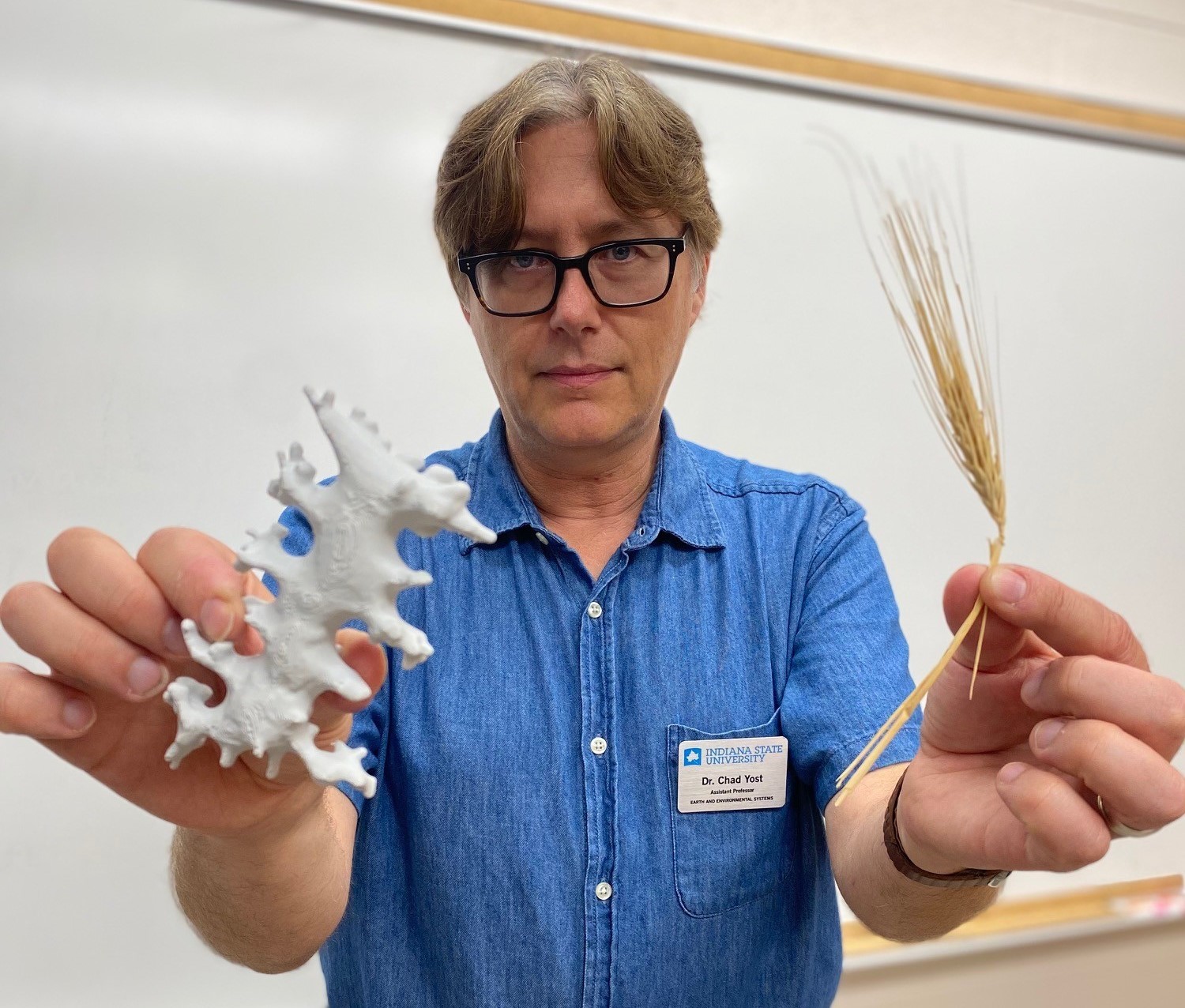
- Chad Yost Indiana State University
- 1 International Committee for Phytolith Taxonomy (ICPT) (Neumann, K., Stromberg, C., Ball, T., Albert, R.M., Vrydaghs, L., Scott Cummings, L.). 2019. International Code for Phytolith Nomenclature (ICPN) 2.0. Annals of Botany 124(2), 189–199. doi:10.1093/aob/mcz064
- 2 ICPN Working Group: Madella, M., Alexandre, A., Ball, T. 2005. International Code for Phytolith Nomenclature 1.0. Annals of Botany 96, 253–260. doi:10.1093/aob/mci172
Regional Working Groups
IPS is actively promoting the formation of Regional Working Groups, encouraging closer communication between researchers in close geographic proximity that often deal with similar phytolith-related issues. If you would like to form a Regional Working Group and publicize it through the IPS, please use the contact form on our website.
The Australasian Phytolith Science Working Group (APSWG) includes researchers located across the region, such as Ōtākou Whakaihu Waka in Aotearoa (New Zealand) and unceded Kaurna, Ngambri, Ngunnawal, Turrbal, Jagera, Wurundjeri, Yuin, Dharawal, and Eora Land in Australia.
- Molly Turnbull University of Wollongong, Australia
- Monica Tromp University of Otago, Aotearoa New Zealand
- Adelie Filippi University of Otago, Aotearoa New Zealand
- Kefie Blair La Trobe University, Australia
- Georgia Jackman Flinders University, Australia
- Ian Moffat Flinders University, Australia
- Adrian Parker Oxford Brookes University, United Kingdom
Please email mjt284@uowmail.edu.au if you're interested in contributing as a member or joining the emailing list for regional research updates.
Social Media
These options are available for phytolith researchers to plug in to social media to ask phytolith-related questions and share experiences with the worldwide phytolith research community.
PHYTO-CHAT-L
For many years, the phytolith research community communicated through the listserve PHY-TALK, which ceased operation several years ago. In 2024, IPS Board member Chad Yost created PHYTO-CHAT-L, a new listserv dedicated to discussion of anything related to phytoliths.
We strongly encourage all phytolith researchers (IPS membership is not required) to join PHYTO-CHAT_L.
To join, fill out a registration form and Chad will send you an email with further instructions.
Join PHYTO-CHAT-LWhatsApp Chat Communities
There are two WhatsApp Chat Communities devoted to asking questions and sharing knowledge about phytolith lab methods (Lab Procedures Community) and phytolith morphotype identification (Microscopy Doubts Community). Since many pre-eminent researchers are part of these communities, they are outstanding resources for both novice and experienced researchers to ask questions and quickly receive assistance. To join these communities, request links by sending a message to the IPS through the form.
Instagram
The most up-to-date information on happenings within the IPS and the phytolith world can be found on Instagram:
@internationalphytolithsociety